
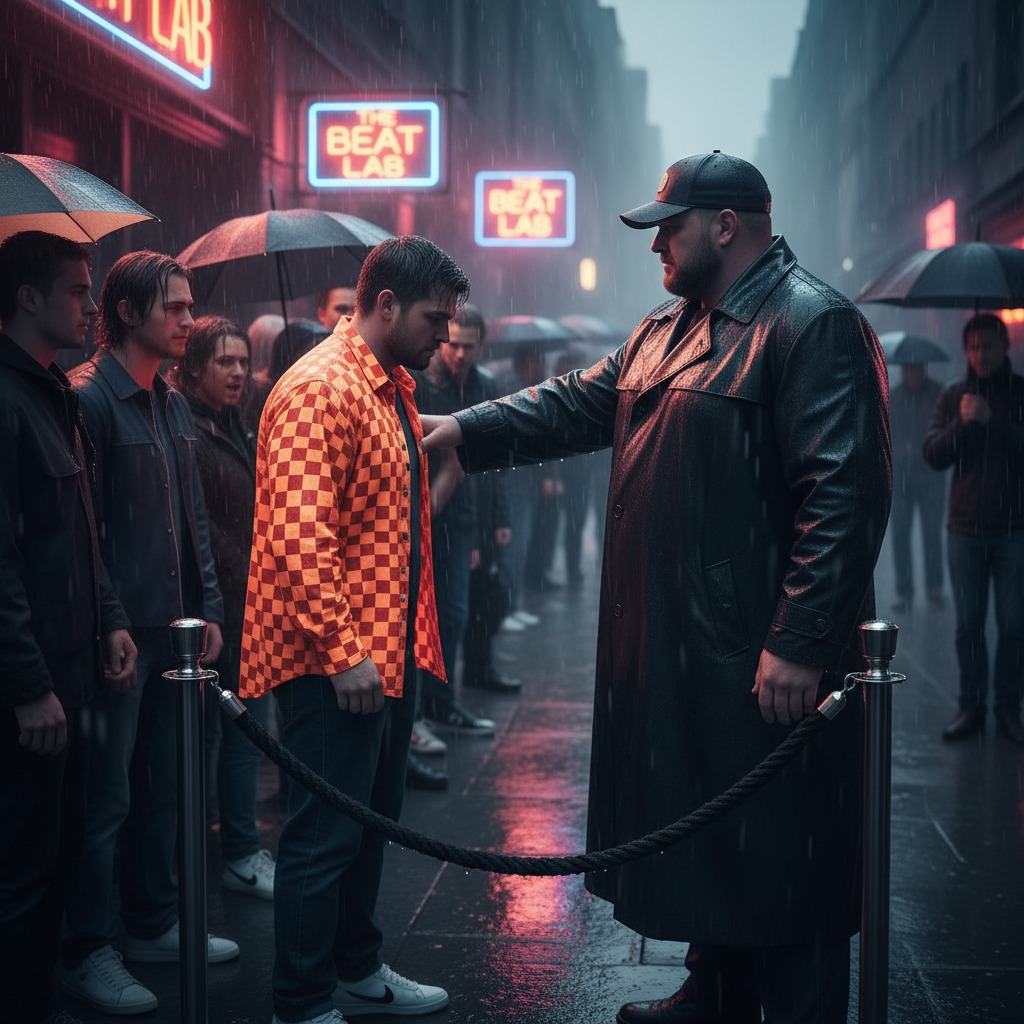
It’s 1997. You’re wearing a Ben Sherman shirt you ironed yourself (which felt an achievement at the time). You’ve been standing outside a nightclub for forty minutes in weather that can’t decide if it’s drizzling or full on raining and the only thing standing between you and a great night is a chap in a black coat who could not be less interested in the shirt.
You don’t know what the entry criteria are, it’s unclear if anyone does, but you straighten up slightly. Attempting to look like someone who belongs inside without looking like you’re trying to look like someone who belongs inside. He glances at you for approximately one second and either nods or doesn’t.
Now what if we played it from the bouncer’s side for a minute?
He’s not being fickle, they’ve got a list (like a security conscious Santa), a capacity and a sense of who the night is for. He already knows half the people in that queue, not because they’re famous, but because they’ve been here before, had a chat, weren’t a problem. Those people aren’t really queuing, they’re just arriving. The ones standing in the cold hoping to get lucky are the ones he’s never seen before, turning up at the moment they want something, with no prior relationship and a freshly ironed shirt.
Which is how most people approach a recruiter.
That’s the bit Neil Johns, Director at Merje, kept coming back to in our conversation for the latest episode of ‘Now What? Life After Redundancy’ the candidates who do well aren’t the ones who showed up and hoped. They’re the ones who’d already had the conversation before they needed to be let in.
The episode covers what recruiters actually see on the other side of all those applications, where candidates sometimes go wrong and what a good recruiter relationship looks like when it’s working properly.
The queue was never the issue. Being unknown to the person at the front of it was (regardless of how well ironed that shirt was).
Leave a Reply